ConcreteAI monitors, visualises, and validates the early-age strength and temperature development of job-site concrete — for shorter structure cycle time and reduced embodied carbon.
Determining when concrete has achieved sufficient strength is one of the most consequential decisions on any construction site, yet it is typically made through a laborious and tedious process that does not reflect actual site conditions.
In early ages, in-situ concrete develops strength more rapidly due to the heat of hydration generated within the structure. When early-age decisions are most critical, sample results do not reflect what is actually happening on site.
Relying on sample results at early ages means the site team is making decisions on data that significantly underrepresents actual in-situ strength — leading to unnecessary waiting time and schedule delays.
Continuous strength monitoring directly from the structure — based on the maturity method per ASTM C1074.


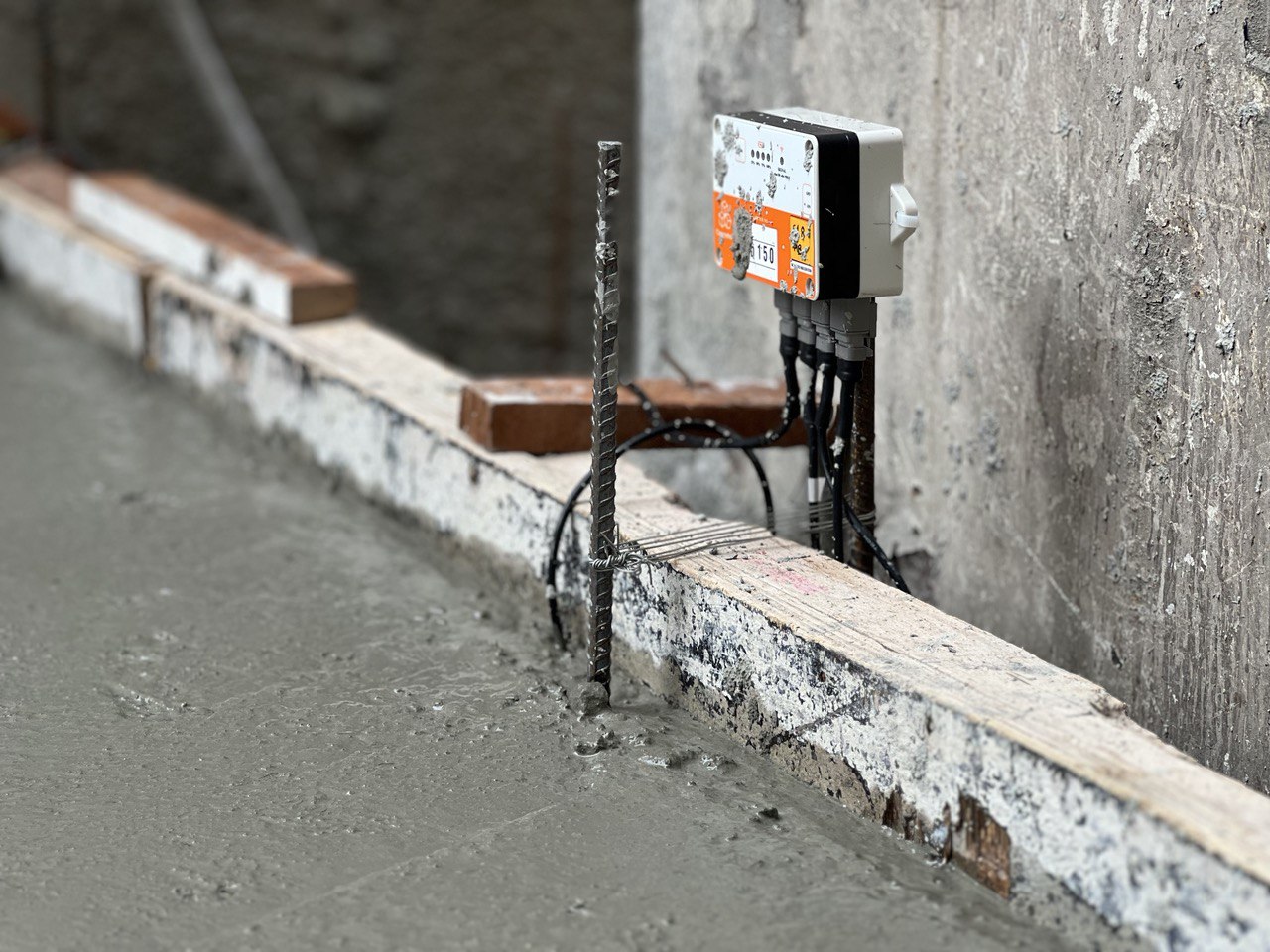
Monitors concrete strength continuously from within the structure — no waiting for lab results, no manual sampling. Connects to four monitoring points per device, with data streamed to the platform 24/7 and configurable alerts when target strength is reached.
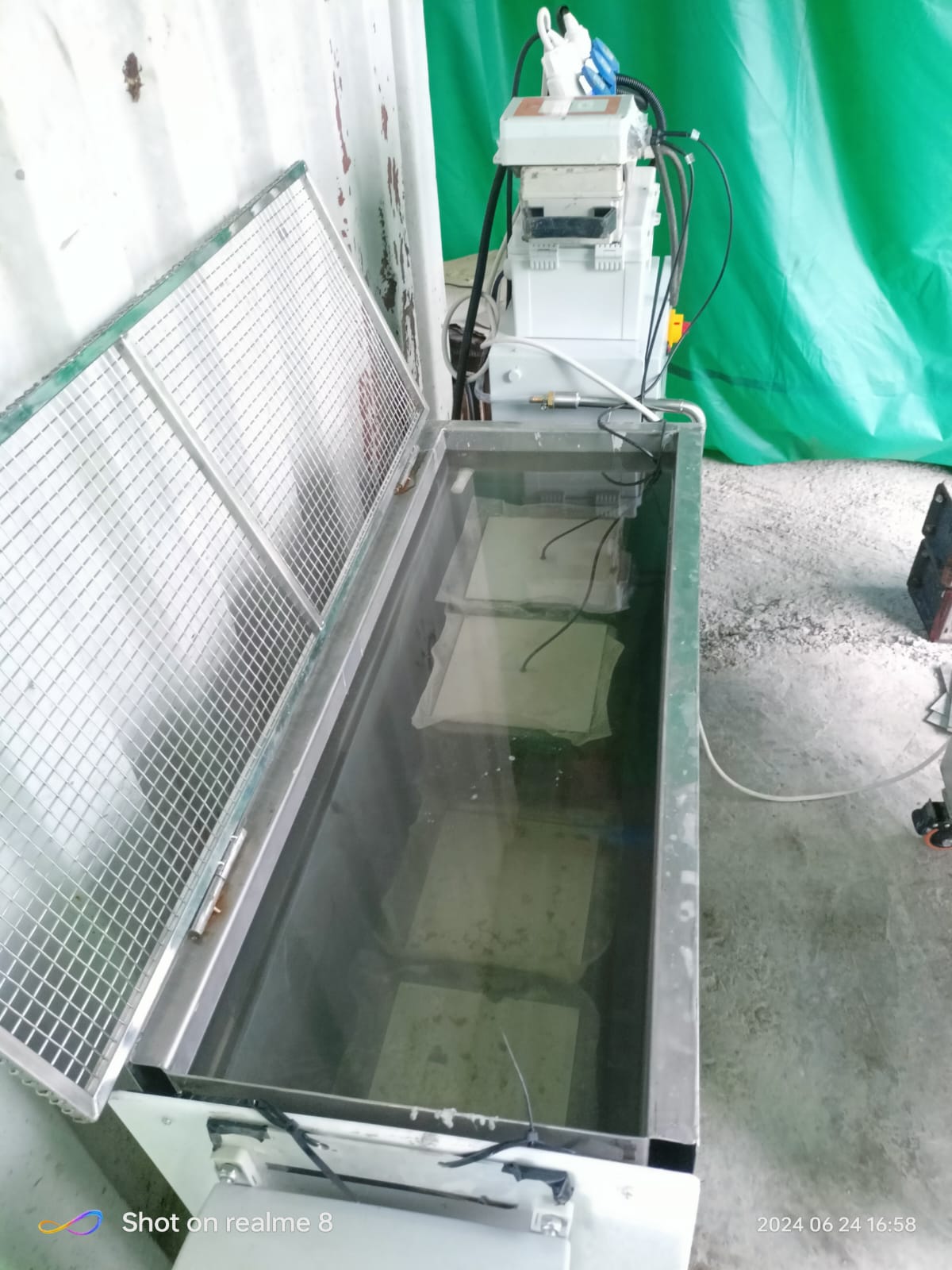
Samples are cured automatically at the same temperature as the in-situ concrete, producing destructive test results that confirm actual in-situ strength conditions.
Stress tendons at actual in-situ strength, reducing the risk of premature stressing and shortening PT slab cycles.
Case study coming soonAccelerated formwork stripping and floor climbing based on real strength data. On a 48-storey project, saving 1 day per floor compounds to 1–2 months of programme gain.
Case study coming soonFaster demoulding, lifting, and transport increases bed turnover without the need to increase concrete grade.
Case study coming soonReturn taxiways and hardstandings to service sooner. Documented QA records meet the requirements of airport and infrastructure authorities.
Case study coming soonReduces waiting time between excavation layers. On completed projects, casting cycle reductions of 40% have been achieved, avoiding costly high early-strength concrete upgrades.
View case study →Precast segments produced faster, enabling earlier road access and reducing programme risk on time-sensitive infrastructure projects.
Case study coming soon
Enter project details to estimate potential savings.
Estimates are indicative. Actual results depend on project conditions and monitoring scope.
Share your project details and ConcreteAI will provide a tailored monitoring plan and ROI assessment within 2 working days.
Book a Demo →At the first pour, until the team is proficient.
Sensor placement, monitoring plans, implementation steps.
Named engineer per project, available for site attendance and coordination.
Auto-generated compliance report per pour.
The SmartHub monitors concrete temperature in real time from within the structural element. This data is correlated with compressive strength using the maturity method — producing continuous in-situ strength readings without physical testing at each time point.
Yes. Both the maturity method (SmartHub) and temperature-matched curing (SmartCure) are supported by established standards.
Singapore — SmartHub (Maturity Method)
Singapore — SmartCure (Temperature-Matched Curing)
SmartCure is also supported by the BCA circular on the use of temperature-matched curing of concrete specimens. View circular →
For other markets, ConcreteAI advises directly on local standards applicability. Markets referencing BS, EN, and ASTM standards are broadly compatible.
Concrete strength is determined using the maturity method per ASTM C1074 and EN 13670. The maturity method captures the relationship between concrete temperature, time, and strength gain. Every unique mix design has its own strength–maturity relationship — a 28-day calibration programme is required per mix design before deployment.
All conventional structure types are supported — walls, slabs, columns, beams, viaducts, hollow-core elements, and pile caps. Both cast-in-situ and precast applications are compatible. All common mix designs are supported, including those incorporating fly ash, GGBS, and silica fume.
A minimum of two monitoring points per structure or casting area is recommended — one at the location of maximum stress, and one at the location of minimum temperature or minimum expected strength, for a conservative reading. A redundant sensor is placed at each critical location. ConcreteAI coordinates with the project team and engineer to finalise a monitoring plan prior to deployment.
Yes — SmartHub and SmartCure are separate products designed to work together on the same platform. SmartHub provides real-time in-situ monitoring; SmartCure provides temperature-matched destructive cube validation. Both can be deployed independently, though most projects benefit from running both in parallel — using SmartCure results to build confidence in SmartHub data over time.